
Reclaim Your Voice Today
You deserve to be heard. Download your free guide to break free from silent treatment and reclaim your power in your relationship.
Get My Free GuideThis post delves into the world of passive aggression in the workplace and its detrimental impact on team dynamics and overall productivity. It’s designed for managers, team leaders, and professionals seeking effective strategies to counteract passive-aggressive behaviors and foster a healthier work environment.
Guerrilla tactics against passive aggression in the workplace are crucial for maintaining a cooperative and productive team environment. This post is tailored for those who lead teams, interact with difficult colleagues, and wish to cultivate a positive workplace culture amidst challenges such as negativity, chronic lateness, and intentional sabotage.
Passive-aggressive coworkers are the most frustrating and obnoxious people in any workplace. The worst case of passive-aggressive behavior involves destructive attitudes such as negativity, sullenness, resentment, procrastination, “forgetting” to do something, chronic lateness, and intentional inefficiency.
When it involves promising to do tasks others rely on — purposefully not getting them done and offering lame excuses later then portray their behavior as non intentional – it’s exasperating for the manager. Time, energy, effort, opportunity, and sometime money is lost.
In cases where some work is actually done, it may be delivered too late to be useful (e.g., “You needed this for the meeting at nine? I thought you said for the meeting at noon!”), may be performed in a way that makes it useless (e.g., “You wanted the stats for ‘06? I thought you said the stats for ‘96!”), or it may be sabotaged in any number of other ways.
This creates a paranoid team or workgroup environment — workers need to be always on the look out for “backstabbing behavior,” so they can defend themselves and preserve the quality of their own work.
If the Team You Lead or Are Part of is Not Succeeding, Your Own Career is at Risk! Passive Aggressive Behavior Can and Often Does Destroy Teams and Poison the Workplace.
In an optimal organization you find efficient high-performing teams. Great team performance depends on trust, cooperation, communication, and employees’ high level of personal responsibility.
Today’s stressful environment makes nurturing high performing teams difficult. Why? Because growing unemployment is resulting in employees working with people they otherwise may not choose to associate. The workforce is stagnant.
Financial insecurity is adding heavy pressure to the workplace. To survive, individuals resort to strategies such as doubling their productivity and making themselves indispensable; while other employees buckle under stress, get burned out and end up performing below their abilities.
A third group of people – passive aggressive workers — have difficulty managing their anger and negative emotions held from present or past situations. Their emotional imbalance sabotages their team with passive aggression. When resources are scarce, all competitive behaviors play harder, and non-productive reactions also develop to frustrate highly effective and valued workers. What results is lower performance and increased organizational and interpersonal stress.
According to the American Management Association, 90% of employees cite passive-aggressive behavior as having a negative impact on workplace morale and effectiveness.
Effective Strategies to Combat Passive Aggressive Behavior in the Workplace.
A good leader knows there are ways of solving such challenges, if what is needed is more training or time. What is more difficult to address is the contradiction between expressed compliance and negative results.
People demonstrating passive aggressive behavior promise compliance, but later there are no measurable results. Sounds disconcerting? Of course it is! And this fake compliance or what has been called “intentional inefficiency” is more usual than expected. According to a recent study of corporate culture conducted by Booz Allen Hamilton, more than 30 percent of the managers, employees and executives surveyed believe they work in unhealthy, passive-aggressive organizations.
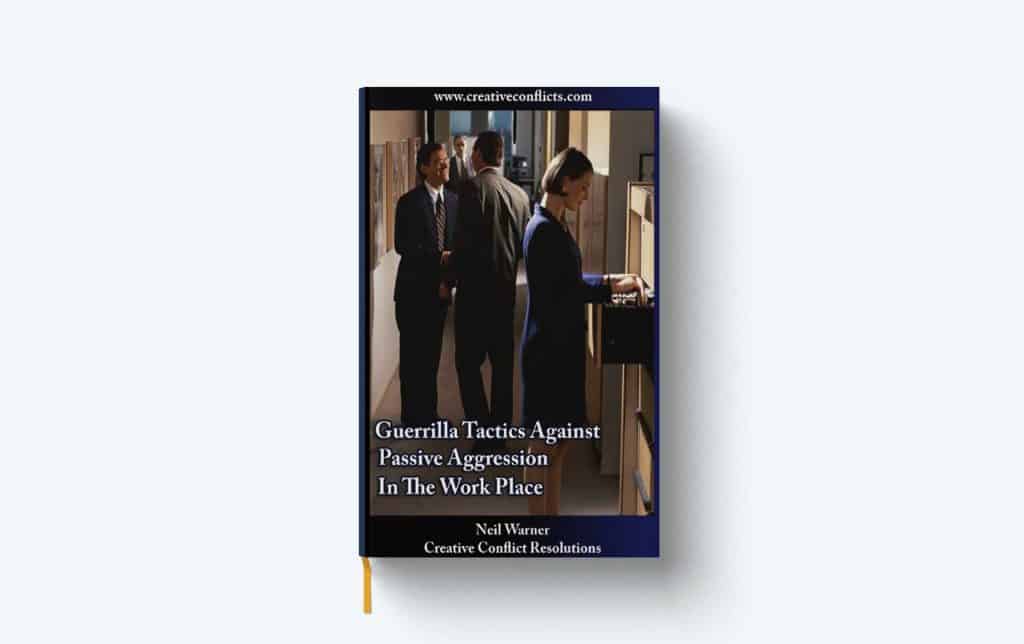
The Complete Guide To Passive Aggression Book 6:
Guerrilla Tactics Against Passive Aggression in the WorkPlace
Frequently Asked Questions
What are some common signs of passive-aggressive behavior in the workplace?
Common signs include chronic lateness, intentional inefficiency, avoiding direct communication, and making excuses after failing to fulfill promised tasks. Recognizing these behaviors early can prevent escalation and promote a healthier work environment.
Why is passive aggression harmful to team dynamics?
Passive aggression undermines trust, encourages resentment, and prevents open communication. It fosters a toxic environment where team members are wary of each other, impeding collaboration and productivity.
How can managers effectively address passive-aggressive behavior?
Managers can address passive aggression by promoting open dialogue, setting clear expectations, and implementing conflict resolution training. Encouraging transparency and accountability helps in mitigating such detrimental behavior.
Can passive-aggressive behavior lead to more severe organizational issues?
Yes, if left unchecked, passive aggression can contribute to a hostile work environment, increase employee turnover, and diminish organizational effectiveness. It’s crucial to tackle these issues promptly to maintain a productive workplace.
How does one confront a passive-aggressive colleague?
When confronting a passive-aggressive colleague, it’s important to focus on specific behaviors and their impacts. Approach with empathy and a readiness to listen, encouraging a constructive conversation about how to improve interactions.
Is passive aggression more common in any particular types of workplace cultures?
Passive aggression can occur in any workplace, but it’s more prevalent in environments that lack open communication and promote competitiveness over collaboration. A culture that emphasizes transparency and cooperation is less likely to harbor such behaviors.
What resources are available for learning more about passive aggression?
There are numerous books and online resources dedicated to understanding and addressing passive-aggressive behavior. The article above references “The Complete Guide To Passive Aggression,” which is a helpful starting point for those seeking in-depth information.
📅 Last updated: